
Periodontitis Gum disease
Periodontitis is a chronic infection that destroys the ligament and bone holding the teeth. It is the leading cause of tooth loss in adults. 42% of dentate US adults 30 and older have it, and 7.8% have the severe form (Eke et al., JADA 2018). A periodontist stages it I to IV and grades it A to C.

Signs
- Pockets of 4 mm or more
- Receding gums and longer-looking teeth
- Loose or drifting teeth
- Gaps opening between teeth
- Pus at the gumline
- A change in how the teeth meet
Risk factors
- Smoking (the strongest single risk)
- Diabetes, especially uncontrolled
- Genetics and family history
- Age
- Stress
- Obesity
How is periodontitis diagnosed?
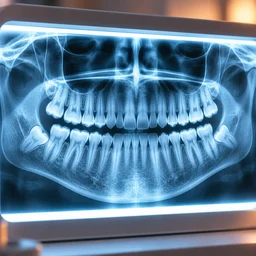
A periodontist measures six points around every tooth with a probe, records bleeding, recession and mobility, and reads X-rays or a 3D CBCT scan for bone level. The result is a periodontal chart and a diagnosis by stage and grade under the 2017 classification.
How is periodontitis treated?
- Deep cleaning. Scaling and root planing removes tartar and bacteria from the roots under local anesthetic.
- Re-evaluation at 6 to 8 weeks. Pockets that healed move to maintenance.
- Surgery for pockets that stay 5 mm or deeper: LANAP laser surgery, flap or osseous surgery, and regeneration with grafts and growth factors.
- Tooth replacement with dental implants where teeth are lost.
- Maintenance every three to four months for life.
Is periodontitis linked to heart disease and diabetes?
Yes, in both directions for diabetes. The EFP and the International Diabetes Federation report that periodontitis raises blood sugar and that treating it lowers HbA1c by about 0.3 percentage points. Consensus reports also link periodontitis with cardiovascular disease. Gum disease and your health.
Questions
Can bone lost to periodontitis grow back?
Sometimes. Regenerative surgery with bone grafts, membranes, growth factors or the LANAP protocol can rebuild bone in certain defects. Horizontal bone loss across many teeth regenerates less predictably.
Will I lose my teeth?
Most teeth with periodontitis are kept when the disease is treated and maintained. Teeth with severe bone loss and mobility may need extraction and replacement.
How fast does periodontitis progress?
It varies by person. The grade (A slow, B moderate, C rapid) records that speed. Smoking and uncontrolled diabetes move a patient toward grade C.
Sources
- Eke PI et al. Periodontitis in US adults: NHANES 2009-2014. JADA 2018
- Tonetti MS, Greenwell H, Kornman KS. Staging and grading of periodontitis. J Periodontol 2018
- Sanz M et al. Periodontal diseases and diabetes, EFP/IDF consensus. J Clin Periodontol 2018
- Sanz M et al. Periodontitis and cardiovascular diseases, consensus report. J Clin Periodontol 2020
- American Academy of Periodontology, patient resources
Gum disease Read next
 GingivitisGingivitis is inflammation of the gums caused by plaque at the gumline.
 Bleeding gumsBleeding gums are the most common early sign of gum disease.
 Gum painGum pain most often comes from inflamed gums, food or debris trapped under the gum, a periodontal abscess, or brushing too hard.
 Receding gumsGum recession is the gum pulling back from the tooth and exposing the root.Bad breathMost chronic bad breath (halitosis) starts in the mouth: bacteria on the back of the tongue, in gum pockets and under old dental work release sulfur compounds.
 Gum disease and your healthPeriodontitis is a chronic inflammatory disease, and its effects reach beyond the mouth.