
Periodontal treatments By a periodontist
Periodontists treat the gums, the bone and the implants that sit in it. Care runs from non-surgical deep cleaning to laser surgery, regeneration, gum grafts and dental implants. The choice follows the stage of disease and what the patient wants to keep.

Gum disease treatment
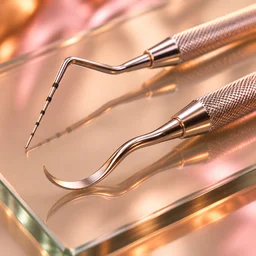 Scaling and root planingScaling and root planing (SRP) is a deep cleaning that removes tartar and bacteria from the tooth roots below the gumline, under local anesthetic.
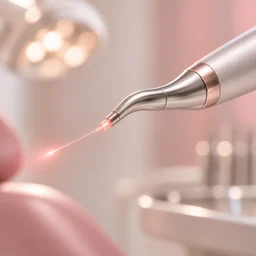 LANAP laser gum surgeryLANAP (Laser-Assisted New Attachment Procedure) treats periodontitis with the PerioLase MVP-7, a 1064 nm Nd:YAG laser made by Millennium Dental Technologies.Laser gum surgeryLaser gum surgery uses light energy in place of a scalpel to remove diseased gum tissue, reduce bacteria and reshape gums.
 Osseous surgeryOsseous surgery, also called pocket reduction or flap surgery, folds back the gum to clean the roots directly and reshape or regenerate the bone around them.
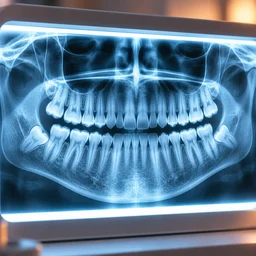 Periodontal regenerationPeriodontal regeneration regrows the bone, ligament and root cementum that hold a tooth, in deep bone defects beside a root (intrabony defects) and between the roots of molars (furcations).
 Periodontal maintenancePeriodontal maintenance is a cleaning every three to four months for patients treated for periodontitis.
Gum recession
Gum graftingA gum graft places new tissue over an exposed root or thin gum to stop recession, cover the root and reduce sensitivity.Pinhole gum rejuvenationThe Pinhole Surgical Technique treats receding gums through a small opening in the gum. Crown lengtheningCrown lengthening removes gum, and often a small amount of bone, to expose more of a tooth.
Dental implants
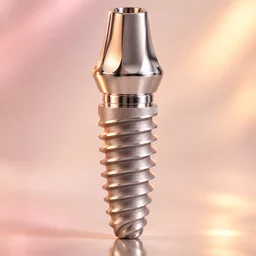 Dental implantsA dental implant is a titanium or zirconia post placed in the jawbone to replace a tooth root.Dental implant process and timelineThe dental implant process runs from a consultation and 3D CBCT scan, through implant surgery and bone healing, to the abutment and final crown.
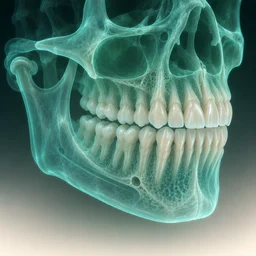 Who can get dental implantsMost adults with healthy gums, enough jawbone and controlled medical conditions can get dental implants.Immediate implants and same-day teethImmediate implants go into the socket on the day a tooth is removed, and immediate loading attaches a tooth to an implant within a week of surgery.
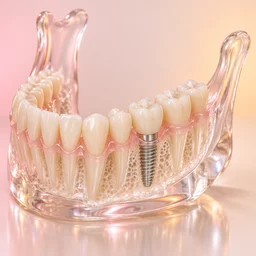 Full-arch implants and implant denturesFull-arch implants replace every tooth in a jaw with either a bridge fixed to implants or a denture that snaps onto them.Guided implant surgeryGuided implant surgery plans each implant on a 3D CBCT scan and transfers the plan to the mouth with a printed guide, live navigation or a robot arm.Zirconia vs titanium implantsTitanium and zirconia implants both bond to the jawbone; titanium has the longer research record and zirconia is the ceramic option.Mini dental implantsMini dental implants are narrow implants, usually in one piece, used mostly to hold a denture in place when the jaw is too thin for standard implants.Implant vs bridge vs dentureDental implants, bridges and dentures all replace missing teeth; they differ in surgery, effect on the neighboring teeth, upkeep and time to finish.How long dental implants lastDental implants usually last decades when the gum and bone around them stay healthy.Recovery after dental implant surgeryRecovery after dental implant surgery takes about a week for the gum and several months for the bone.Peri-implantitisPeri-implantitis is an infection of the gum and bone around a dental implant.
Bone grafting
Bone graftingA dental bone graft adds bone or a bone substitute where the jaw is too thin or short for an implant, or fills a socket after extraction to keep its shape.Bone graft materialsBone graft materials come from four sources: the patient's own bone (autograft), processed human donor bone (allograft), cattle or pig bone mineral (xenograft) and lab-made minerals (alloplast).Socket preservation after extractionSocket preservation places bone graft material in a tooth socket at the extraction visit, usually under a collagen membrane or sponge, to limit shrinking of the jaw ridge as it heals.Ridge augmentationRidge augmentation rebuilds a jaw ridge that is too thin or too short for an implant, adding width (horizontal) or height (vertical) with particulate grafts under a membrane, bone blocks, ridge splitting or tenting screws.Guided bone regeneration (GBR)Guided bone regeneration (GBR) covers a bone graft with a barrier membrane that keeps soft tissue cells out of the defect, so bone-forming cells from the surrounding jaw can fill it.Sinus liftA sinus lift raises the membrane of the maxillary sinus and places bone graft beneath it, adding height to the upper back jaw so implants can be placed.Sinus lift types: lateral window and crestalA lateral window sinus lift reaches the sinus floor through a small window in the side of the upper jaw, and a crestal (osteotome) lift raises the floor through the implant hole from below. PRF and growth factorsPRF and PRP are concentrates spun from the patient's own blood, and Emdogain, rhPDGF-BB (GEM 21S) and rhBMP-2 (INFUSE) are FDA-approved biologics added to periodontal or bone grafts.Bone graft recovery day by dayRecovery from a dental bone graft comes in stages: the gum heals over 1 to 3 weeks, and the graft then matures into bone over months before an implant.Bone graft failureA dental bone graft fails when infection, exposure through the gum or poor healing leaves too little new bone for an implant.