

Gum disease starts with bleeding and ends, untreated, in bone loss. Periodontists stop it, rebuild what they can and place implants where teeth are lost. Find the best one near you, city by city, ranked from public records.










Dr. Michael Pawlus DDS, MS
Board-certified periodontist. University of Iowa dental school, University of Florida periodontics. LANAP laser surgery, Pinhole gum rejuvenation, gum surgery and dental implants, with more than twenty years in periodontics.
drmichaelpawlus.com (941) 923-2288 Google profile Directions Facebook YouTube Instagram NPI record- Sarasota office
- 1704 Bay Rd, Sarasota, FL 34239
- Lakewood Ranch office
- 6320 Venture Dr (inside East Lakewood Dental), Lakewood Ranch, FL 34202

Keep your Teeth
Treat gum disease early, rebuild lost bone, and replace missing teeth with implants placed by a specialist.
Gum disease Signs
Bleeding when brushing is the first sign. Each sign opens its causes and treatment.
Gingivitis
Gingivitis is inflammation of the gums caused by plaque at the gumline.
Read
Periodontitis
Periodontitis is a chronic infection that destroys the ligament and bone holding the teeth.
Read
Bleeding gums
Bleeding gums are the most common early sign of gum disease.
Read
Gum pain
Gum pain most often comes from inflamed gums, food or debris trapped under the gum, a periodontal abscess, or brushing too hard.
Read
Receding gums
Gum recession is the gum pulling back from the tooth and exposing the root.
Read
Loose teeth
An adult tooth that moves has lost support.
Read
Bad breath
Most chronic bad breath (halitosis) starts in the mouth: bacteria on the back of the tongue, in gum pockets and under old dental work release sulfur compounds.
Read
Gum disease and your health
Periodontitis is a chronic inflammatory disease, and its effects reach beyond the mouth.
Read
Bone loss around teeth
Bone loss around teeth is the loss of the jawbone that anchors the roots, most often caused by periodontitis.
ReadPeriodontists By city
Each city page ranks the periodontists within 30 miles, with a map.







Treatments By a periodontist
What a periodontist treats and how, from deep cleaning to implants.
Gum disease treatment
 Scaling and root planingScaling and root planing (SRP) is a deep cleaning that removes tartar and bacteria from the tooth roots below the gumline, under local anesthetic.
 LANAP laser gum surgeryLANAP (Laser-Assisted New Attachment Procedure) treats periodontitis with the PerioLase MVP-7, a 1064 nm Nd:YAG laser made by Millennium Dental Technologies.Laser gum surgeryLaser gum surgery uses light energy in place of a scalpel to remove diseased gum tissue, reduce bacteria and reshape gums.
 Osseous surgeryOsseous surgery, also called pocket reduction or flap surgery, folds back the gum to clean the roots directly and reshape or regenerate the bone around them.
 Periodontal regenerationPeriodontal regeneration regrows the bone, ligament and root cementum that hold a tooth, in deep bone defects beside a root (intrabony defects) and between the roots of molars (furcations).
 Periodontal maintenancePeriodontal maintenance is a cleaning every three to four months for patients treated for periodontitis.
Gum recession
Gum graftingA gum graft places new tissue over an exposed root or thin gum to stop recession, cover the root and reduce sensitivity.Pinhole gum rejuvenationThe Pinhole Surgical Technique treats receding gums through a small opening in the gum. Crown lengtheningCrown lengthening removes gum, and often a small amount of bone, to expose more of a tooth.
Dental implants
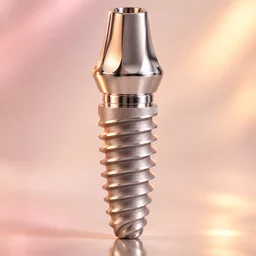 Dental implantsA dental implant is a titanium or zirconia post placed in the jawbone to replace a tooth root.Dental implant process and timelineThe dental implant process runs from a consultation and 3D CBCT scan, through implant surgery and bone healing, to the abutment and final crown.
 Who can get dental implantsMost adults with healthy gums, enough jawbone and controlled medical conditions can get dental implants.Immediate implants and same-day teethImmediate implants go into the socket on the day a tooth is removed, and immediate loading attaches a tooth to an implant within a week of surgery.
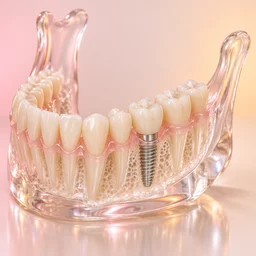 Full-arch implants and implant denturesFull-arch implants replace every tooth in a jaw with either a bridge fixed to implants or a denture that snaps onto them.Guided implant surgeryGuided implant surgery plans each implant on a 3D CBCT scan and transfers the plan to the mouth with a printed guide, live navigation or a robot arm.Zirconia vs titanium implantsTitanium and zirconia implants both bond to the jawbone; titanium has the longer research record and zirconia is the ceramic option.Mini dental implantsMini dental implants are narrow implants, usually in one piece, used mostly to hold a denture in place when the jaw is too thin for standard implants.Implant vs bridge vs dentureDental implants, bridges and dentures all replace missing teeth; they differ in surgery, effect on the neighboring teeth, upkeep and time to finish.How long dental implants lastDental implants usually last decades when the gum and bone around them stay healthy.Recovery after dental implant surgeryRecovery after dental implant surgery takes about a week for the gum and several months for the bone.Peri-implantitisPeri-implantitis is an infection of the gum and bone around a dental implant.
Bone grafting
Bone graftingA dental bone graft adds bone or a bone substitute where the jaw is too thin or short for an implant, or fills a socket after extraction to keep its shape.Bone graft materialsBone graft materials come from four sources: the patient's own bone (autograft), processed human donor bone (allograft), cattle or pig bone mineral (xenograft) and lab-made minerals (alloplast).Socket preservation after extractionSocket preservation places bone graft material in a tooth socket at the extraction visit, usually under a collagen membrane or sponge, to limit shrinking of the jaw ridge as it heals.Ridge augmentationRidge augmentation rebuilds a jaw ridge that is too thin or too short for an implant, adding width (horizontal) or height (vertical) with particulate grafts under a membrane, bone blocks, ridge splitting or tenting screws.Guided bone regeneration (GBR)Guided bone regeneration (GBR) covers a bone graft with a barrier membrane that keeps soft tissue cells out of the defect, so bone-forming cells from the surrounding jaw can fill it.Sinus liftA sinus lift raises the membrane of the maxillary sinus and places bone graft beneath it, adding height to the upper back jaw so implants can be placed.Sinus lift types: lateral window and crestalA lateral window sinus lift reaches the sinus floor through a small window in the side of the upper jaw, and a crestal (osteotome) lift raises the floor through the implant hole from below. PRF and growth factorsPRF and PRP are concentrates spun from the patient's own blood, and Emdogain, rhPDGF-BB (GEM 21S) and rhBMP-2 (INFUSE) are FDA-approved biologics added to periodontal or bone grafts.Bone graft recovery day by dayRecovery from a dental bone graft comes in stages: the gum heals over 1 to 3 weeks, and the graft then matures into bone over months before an implant.Bone graft failureA dental bone graft fails when infection, exposure through the gum or poor healing leaves too little new bone for an implant.
Before you book Patient guide
The first visit, the credentials to check, the questions to ask and how long treatment takes.
First periodontist visit step by stepA first periodontist visit moves through a medical and medication review, an exam, a full periodontal chart, x-rays, a diagnosis by stage and grade, and a written treatment plan with a cost estimate. How to check a periodontist's credentialsFour public records confirm a Florida periodontist's credentials: the Department of Health license search, the federal NPI Registry, the American Board of Periodontology locator and CODA's list of accredited residencies.Questions to ask a periodontistPatients can ask a periodontist about training, the diagnosis, treatment options, time and visits, cost and insurance, sedation and aftercare before agreeing to a plan.How long periodontal treatment takesPeriodontal treatment time runs from a single deep-cleaning visit to many months when extraction, bone grafting and an implant are staged.Sedation for gum and implant surgeryGum and implant surgery is done under local anesthesia, alone or with nitrous oxide, oral sedation, IV moderate sedation or general anesthesia.Treatment codes on a periodontal planThe codes on a periodontal treatment plan are CDT codes, the HIPAA standard code set for dental records and claims, published by the American Dental Association.Referrals to a periodontistA referral to a periodontist is required only when the dental plan requires one.Second opinion on a periodontal planA second opinion is a separate evaluation of the diagnosis and plan by another periodontist, built on copies of the first office's x-rays, chart and coded plan.Preparing for gum or implant surgeryPreparing for gum or implant surgery means a medication review with the prescribing physician, antibiotics only for patients who meet heart or joint criteria, fasting when sedation is planned, a ride home and soft food at home.
Questions Answered
What patients ask about gums, bone, pain and treatment, from Google searches.
Gum disease and symptoms
Why do my gums hurt?Gums hurt most often because they are inflamed by plaque (gingivitis), infected in a deep pocket (a periodontal abscess), irritated by trapped food, or worn by hard brushing.Can gum disease be reversed?Gingivitis, the early stage, reverses completely: gums return to health within days to weeks of removing plaque.Can bone loss around teeth be reversed?Some bone lost to periodontitis can be rebuilt.Is gum disease genetic?Genes influence how strongly a person's immune system reacts to gum bacteria, so periodontitis runs in families and some people progress fast even with good care.Does smoking cause gum disease?Smoking is the strongest single risk factor for periodontitis: the CDC puts smokers at twice the risk, and in NHANES III current smokers had about four times the odds.What do gum pocket numbers mean?The numbers called out during a gum exam are pocket depths: how far, in millimeters, a probe slides between the gum and the tooth.Treatment and surgery
Am I a candidate for LANAP?Good candidates for LANAP have moderate to severe periodontitis with pockets of 5 mm or more that remain after deep cleaning, and want to keep their teeth without cutting and stitches.Does gum surgery hurt?Gum surgery is done under local anesthetic, so the procedure itself should not hurt; many offices add oral or IV sedation.Gum surgery recoveryMost gum surgery heals at the surface in one to two weeks.Is laser gum surgery better?Laser gum surgery is usually more comfortable with faster recovery than scalpel flap surgery: no cutting or stitches with LANAP, less bleeding and swelling.What is the difference between scaling and root planing and a regular cleaning?A regular cleaning removes plaque and tartar near the gumline.How painful is a deep cleaning?A deep cleaning is done with local anesthesia that numbs the gums.Periodontists and training
How periodontists work with general dentistsPeriodontists and general dentists share care.How to choose a periodontistChoose a periodontist on five things: board certification by the American Board of Periodontology, the range of treatments offered (deep cleaning, LANAP, grafting, implants), results shown and measured, reviews from patients, and how …What does a periodontist do?A periodontist is a dentist who specializes in preventing, diagnosing and treating gum disease, and in placing dental implants.What is the difference between a dentist and a periodontist?A general dentist provides routine cleanings, fillings, crowns and bridges.How long does it take to become a periodontist?A periodontist completes four years of dental school and then three more years of specialty training in periodontics.Is a periodontist the same as an oral surgeon?No. A periodontist specializes in the gums and the jawbone that supports the teeth.Implants and periodontics
Can you get dental implants if you have gum disease?Not while gum disease is active.What are the early signs of peri-implantitis?Early signs of a problem around an implant are red or tender gums and bleeding when you brush.Can peri-implantitis be cured?Peri-implantitis can often be controlled, but treatment does not always stop it.What is a dental bone graft?A dental bone graft adds material to the jaw to replace lost or thin bone.How long after a bone graft can you get an implant?A bone graft needs at least 3 months to heal before an implant.What are the first signs of a dental implant failing?Signs of a failing or infected implant are an implant that feels loose or wobbly, bleeding or swollen gums around it, and pus around the implant.Cost, insurance and practical
Does insurance cover gum treatment?Most dental plans cover scaling and root planing and periodontal maintenance as basic services, and gum surgery, including LANAP and grafting, as major services at a lower percentage.How long does a deep cleaning take?A deep cleaning, or scaling and root planing, takes one to two hours.How often should you see a periodontist?It depends on how severe your gum disease is.Does Medicare cover periodontal treatment?In most cases, no. Original Medicare does not cover most dental care, such as cleanings, fillings, extractions, dentures or implants.How can I pay for gum disease treatment?Ask your periodontist about payment plans and what your insurance covers.Is gum disease contagious? Can I kiss my partner?Gum disease itself comes from inflammation, but the bacteria behind it can spread through saliva.Top periodontists Florida
Ranked by reviews, search visibility, associations, teaching and published work. Method.
-
 Profile
- 1 Profile
South Florida Center for Periodontics & Implant Dentistry
Website (561) 912-9993 Google Directions Yelp - 2 Profile
- 3 Profile
- 4 Profile
- 5 Profile
- 6 Profile
- 7 Profile
- 8 Profile
- 9 Profile
- 10 Profile
Central Florida Oral, Facial and Periodontal Surgery and Dental Implants
Website (352) 391-5550 Google Directions Yelp
Periodontics The specialty
Three years of residency after dental school. History, training, the board, the associations and the papers behind the field.
What is a periodontistA periodontist is a dentist who has completed three additional years of accredited residency in periodontics.Training and schoolsPeriodontists train in three-year residencies accredited by the Commission on Dental Accreditation.AssociationsPeriodontists in Florida belong to national, regional and state bodies.ResearchThe newest research comes first.Board certificationA board-certified periodontist is a diplomate of the American Board of Periodontology (ABP).History of periodonticsPeriodontics grew from Pierre Fauchard's 1728 description of gum disease, through John Riggs's 19th-century therapy and the founding of the American Academy of Periodontology in 1914, to the science of the late 20th century: plaque as …Modern periodontal techniquesModern periodontics rebuilds as well as removes disease.Periodontists and dental implantsPeriodontists place dental implants and manage the bone and gum that hold them.Where Florida periodontists trained
University of FloridaDr. Victoria Adams, Dr. Jamie Amir, Dr. Lee Cohen and moreNova Southeastern UniversityDr. David Beltran, Dr. Ovadia Chocron, Dr. J'Nelle Delica and moreBoston University Henry M. GoldmanDr. Richard Caudill, Dr. Lorena Corzo, Dr. Bruce Crawford and moreUABDr. Adrian Abrahams, Dr. Gary Altschuler, Dr. Jeffry Barnes and moreLSUDr. Rafik Dib, Dr. N Farris, Dr. Darryl Field and moreUniversity of PittsburghDr. Mitchell Hanson, Dr. Hector Pinero, Dr. Robert Yu and more