
First periodontist visit step by step Patient guide
A first periodontist visit moves through a medical and medication review, an exam, a full periodontal chart, x-rays, a diagnosis by stage and grade, and a written treatment plan with a cost estimate. At Boston University's periodontics clinic, the first appointment typically takes 60 to 90 minutes.

What happens at a first periodontist visit?
A first periodontist visit is an evaluation that ends in a diagnosis and a written plan. The order follows the AAP's description of a first visit and the consultation at Ohio State's graduate periodontology clinic.
- Forms: medical and dental history, medications, supplements and insurance.
- Exam: gum recession, how the teeth meet when biting and which teeth are loose.
- Charting: probing depth around every tooth, plus bleeding, recession, mobility and furcation.
- Imaging: x-rays of the bone, or a 3D cone-beam (CBCT) scan when implants are planned.
- Diagnosis: a stage and a grade under the 2017 classification.
- Plan: treatment and anesthetic options, future visits and an estimate of the patient's share of the cost.
Boston University's clinic completes dental records, consent forms and the treatment plan in the same session. Ohio State's clinic does no treatment or surgery at the first appointment. Ask when booking whether the office treats on day one.
Why does the periodontist need my medication list?
The medication list shows the periodontist which drugs affect bleeding and bone surgery. The AAP names medications and conditions such as heart disease, diabetes and pregnancy as facts the periodontist needs at the first visit.
- Blood thinners: warfarin, clopidogrel, prasugrel, ticagrelor, aspirin, apixaban, rivaroxaban, dabigatran and edoxaban. The ADA concludes that most patients need no change to these before dental treatment. Any change is made with the prescribing physician.
- Bone drugs: bisphosphonates such as alendronate and zoledronic acid, and denosumab. These carry a rare risk of medication-related osteonecrosis of the jaw (MRONJ), which usually follows extractions or other bone surgery. The ADA cites an incidence of 0.001% to 0.01% with oral bisphosphonates for osteoporosis.
The ADA lists use for more than 2 years and existing periodontitis among the factors that raise MRONJ risk. Bring each drug's name, dose and start date, including supplements. Preparing for surgery.
What does a full periodontal chart measure?
A full periodontal chart measures pocket depth at 6 sites on every tooth, along with bleeding, gum position, mobility and furcation. Scottish dental guidance (SDCEP) sets the six-site standard, and CDC researchers used the same count in the national NHANES survey.
| Measurement | What it records | Why it matters |
|---|---|---|
| Probing depth | Distance from the gum edge to the base of the pocket | Shows the short-term response to treatment |
| Bleeding on probing | Bleeding from the base of the pocket | Signals that active disease may be present; less reliable in smokers |
| Recession and attachment level | Gum margin position; attachment level combines it with pocket depth | Attachment level is the best measure of lost support over time |
| Mobility | Horizontal and vertical tooth movement, graded | Tooth hypermobility adds to stage complexity |
| Furcation | Bone loss between the roots of multi-rooted teeth | Furcation involvement adds to stage complexity |
Will I need x-rays or a CBCT scan?
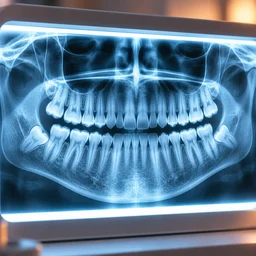
X-rays are part of a first visit unless recent ones arrive from the dentist, and a CBCT scan is added for some implant and periodontitis cases. The AAP describes x-rays at the first visit to show the bone below the gumline. Ohio State's clinic takes x-rays unless the dentist has already sent acceptable ones.
ADA guidance limits imaging to cases where the periodontist judges a clear clinical benefit that outweighs the radiation risk. The ADA reserves CBCT for cases where lower-exposure images cannot give the needed information. An AAP consensus panel reviewed CBCT for implant placement, for orthodontic cases with periodontal risk and for periodontitis, and found too little evidence for definitive practice guidelines.
- Ask the general dentist to send recent x-rays before the visit.
- Ask what the scan will change in the plan.
On an estimate, a full x-ray series is D0210, a panoramic image is D0330 and a CBCT of both jaws is D0367. Treatment codes.
How is the diagnosis and treatment plan explained?
The diagnosis is given as a stage and a grade under the 2017 classification, and the plan lists the treatment steps with an estimate. Stage runs from I to IV. Stage reflects severity, the complexity of treatment and the extent of disease, localized or generalized. Grade runs from A to C by rate of progression, slow, moderate or rapid, and smoking and diabetes act as grade modifiers. The AAP's staging chart tells clinicians to start at grade B and move to A or C on specific evidence.
Treatment follows steps in the EFP clinical guideline. Step one is home care and risk-factor control. Step two is cleaning below the gumline. The guideline considers surgery, step three, for sites that still miss the endpoints at re-evaluation. Ask for a written plan that names each procedure, its CDT code, the fee and the estimated patient share. Questions to ask about the plan.
Questions
What should I bring to my first periodontist appointment?
Bring photo ID, dental insurance information, current x-rays if the dentist has not sent them, and a list of medications and supplements, the items Ohio State's graduate periodontology clinic asks for. Add any referral form the plan requires, the names of the referring dentist and physician, and written questions about the plan.
Will I get a cleaning at my first periodontist visit?
Often not. At Ohio State's graduate periodontology clinic, the first appointment is a consultation only, with an exam, x-rays and a treatment plan with an estimate. Treatment is scheduled for later visits. Ask when booking whether a cleaning or other treatment can happen the same day, and whether the office needs x-rays sent ahead.
Does a periodontist fall under medical or dental insurance?
Periodontal care is billed to dental plans with CDT codes, the HIPAA standard code set for dental claims. Delta Dental notes that some oral procedures may count as medical procedures, which brings in the health plan. Ask the office to send a pre-treatment estimate to both plans when a medical plan may apply.
How often should I see a periodontist?
The visit schedule depends on the stage of disease and risk. The AAP describes exams every six months for mild periodontal disease and every few months for advanced stages. The EFP guideline sets supportive care visits at intervals of 3 to 12 months, tailored to each patient's risk profile.
What does stage and grade mean on my chart?
Stage and grade come from the 2017 World Workshop classification of periodontitis. Stage, I to IV, describes how much tissue has been lost and how complex treatment will be. Grade, A to C, estimates how fast the disease is progressing. The AAP's chart lists smoking and diabetes as factors that can raise the grade.
Sources
- American Academy of Periodontology. What is a periodontist?
- Ohio State University College of Dentistry. Graduate periodontology clinic
- Boston University Goldman School of Dental Medicine. Periodontics patient care
- Scottish Dental Clinical Effectiveness Programme. Prevention and treatment of periodontal diseases in primary care: periodontal parameters
- Eke PI et al. Prevalence of periodontitis in adults in the United States: 2009 and 2010. J Dent Res 2012
- Tonetti MS, Greenwell H, Kornman KS. Staging and grading of periodontitis: framework and proposal of a new classification and case definition. J Periodontol 2018
- American Academy of Periodontology. Staging and grading periodontitis, 2017 World Workshop
- Sanz M et al. Treatment of stage I-III periodontitis: the EFP S3 level clinical practice guideline. J Clin Periodontol 2020
- Mandelaris GA et al. American Academy of Periodontology best evidence consensus statement on selected oral applications for cone-beam computed tomography. J Periodontol 2017
- American Dental Association. X-rays/radiographs
- American Dental Association. Oral anticoagulant and antiplatelet medications and dental procedures
- American Dental Association. Osteoporosis medications and medication-related osteonecrosis of the jaw
- Aetna Dental Clinical Policy Bulletin 048. Dental radiographic examinations
- American Dental Association. CDT coding education
- Delta Dental of Michigan. Dental referral FAQ
- American Academy of Periodontology. Patient FAQs
Patient guide Read next
 How long periodontal treatment takesPeriodontal treatment time runs from a single deep-cleaning visit to many months when extraction, bone grafting and an implant are staged.
 Sedation for gum and implant surgeryGum and implant surgery is done under local anesthesia, alone or with nitrous oxide, oral sedation, IV moderate sedation or general anesthesia.
 Referrals to a periodontistA referral to a periodontist is required only when the dental plan requires one.
 Second opinion on a periodontal planA second opinion is a separate evaluation of the diagnosis and plan by another periodontist, built on copies of the first office's x-rays, chart and coded plan.Preparing for gum or implant surgeryPreparing for gum or implant surgery means a medication review with the prescribing physician, antibiotics only for patients who meet heart or joint criteria, fasting when sedation is planned, a ride home and soft food at home.
 How to check a periodontist's credentialsFour public records confirm a Florida periodontist's credentials: the Department of Health license search, the federal NPI Registry, the American Board of Periodontology locator and CODA's list of accredited residencies.