
Ridge augmentation Periodontal treatment
Ridge augmentation rebuilds a jaw ridge that is too thin or too short for an implant, adding width (horizontal) or height (vertical) with particulate grafts under a membrane, bone blocks, ridge splitting or tenting screws. Across all techniques, a meta-analysis found an average vertical gain of 4.16 mm.

Step by step
- A cone beam CT scan measures the ridge.
- The gum is lifted away from the ridge to expose the area where bone is missing.
- The defect is filled with bone or bone substitute: particles under a membrane, a block fixed with screws, or a split ridge packed with graft.
- The gum is closed over the graft without tension.
- Small defects get the implant at the same visit, and larger grafts heal for at least 4 months first.
- Screws that held a block graft come out when the implant goes in.
How do horizontal and vertical ridge augmentation differ?
Horizontal augmentation adds width to a ridge that is too thin, and vertical augmentation adds height to a ridge that is too short. Vertical augmentation is harder and brings more surgical challenges and morbidity.
| Direction | Fixes | Pooled gain |
|---|---|---|
| Horizontal (lateral) | A thin ridge | 3.71 mm |
| Vertical | A short ridge | 4.16 mm |
In lateral grafting, the thinner the starting ridge, the more width the graft added. Patient age and the jaw that received the graft affected how much of it resorbed. A European consensus judged lateral augmentation before implants predictable and vertical augmentation effective, with a high rate of complications for both. Reviewers advise overbuilding horizontal grafts to allow for shrinkage. Bone grafting covers why ridges shrink, and dental implants covers the implant itself.
What are the ridge augmentation techniques?
Ridge augmentation is done with guided bone regeneration, block grafts, ridge splitting, tenting or distraction osteogenesis.
- Guided bone regeneration (GBR): graft particles held under a barrier membrane.
- Block graft: a piece of bone from the patient's hip, jaw, chin or scalp, or from a bone bank, screwed to the ridge.
- Ridge split, also called bone expansion: the ridge is split and spread apart, and the gap is filled with graft.
- Tenting: screws or poles hold the soft tissue off the graft to keep space while bone forms.
- Distraction osteogenesis: a cut segment of bone is moved every few days with a screw device, and new bone fills the gap.
Ridge split needs adequate length and width of bone to work. Distraction is rarely used because the technique is complex and the patient has to turn the device. The AAP describes the common first step: the gum is lifted, and the void is filled with bone or bone substitute. Guided bone regeneration covers membranes in detail.
How much bone does ridge augmentation add?
Particulate grafts add about 3.7 mm of width or height on average, and some techniques add more.
| Technique | Pooled gain | Complication rate |
|---|---|---|
| Vertical GBR | 4.18 mm | 12.1% |
| Vertical block graft | 3.46 mm | 23.9% |
| Distraction osteogenesis | 8.04 mm | 47.3% |
| Tenting screws, vertical | 5.43 mm | Not reported |
| Tenting screws, horizontal | 3.62 mm | Not reported |
| Horizontal block graft | 4.18 mm | Not reported |
| Horizontal GBR | 3.61 mm | Not reported |
| Ridge split | 3.61 mm | Not reported |
In comparative studies, vertical GBR gained 1.34 mm more than bone blocks. Block grafts kept their starting volume better than GBR during healing. Vertical gains well beyond the average need bone blocks taken from outside the mouth. Titanium mesh raised vertical gain and also raised the complication rate. Bone graft materials covers how the material affects these results.
Is the implant placed with the graft or later?
Small defects are grafted at the same visit as the implant, and larger grafts heal for at least 4 months before the implant goes in.
- Graft at the implant visit: bone is placed over any exposed part of the implant and covered with a membrane, usually with no extra healing time.
- Block grafts from the hip: 4 to 6 months of healing before implants.
- Autogenous grafts in a clinic series: a CT scan after 3 to 5 months, then implant planning.
- Vertical GBR with PTFE membranes: the membranes came out at 6 months in a randomized trial.
With collagen membranes, implant survival was similar whether the implant went in with the graft or later, and the review recommends the same visit when possible. Implants in augmented bone survive at rates comparable to implants in native bone. After lateral grafts, implant survival was 97% to 100%. The dental implant process continues from here.
What are the risks of ridge augmentation?
Exposure of the membrane or block graft through the gum is the most common complication of ridge augmentation.
- Onlay block grafts had a complication rate of 14.8% in a systematic review.
- Infection of the graft area, or too little bone for the implant after healing, are listed as later problems.
- Bone taken from the jaw or chin carries risks of numbness of the lips and cheeks and a dimple in the chin.
- Hip grafts leave a scar along the pant line and need an overnight hospital stay.
- Nerve changes after onlay block grafts were reported in several studies.
Patients who do not smoke report fewer complications, and correct flap elevation with a tension-free closure lowers the risk. Short implants are an option for some vertical defects. Bone graft failure covers what happens when a graft does not heal.
Questions
Is ridge augmentation painful?
Pain after ridge augmentation is usually controlled with simple painkillers such as ibuprofen or paracetamol. Hip grafts are managed with strong painkillers in hospital, then tablets at home. Swelling is at its worst about two days after surgery, and bruising can appear on the face. Patients usually feel better once the stitches come out, 7 to 10 days after surgery.
Is ridge augmentation the same as a bone graft?
Ridge augmentation is a bone graft placed on a healed ridge to make it wider or taller. Socket preservation grafts a fresh extraction socket, and a sinus lift grafts the space under the sinus floor. Each uses the same families of graft material: the patient's own bone, donor bone, animal mineral and synthetic material.
Does the hip bone grow back after a graft?
Yes. The hip regrows the bone taken for a graft, and an NHS hospital leaflet expects it back within 3 months. The harvest leaves a scar along the pant line, needs an overnight stay and carries a risk of permanent numbness over the site. Grafts from the jaw or chin supply less bone.
What are the alternatives to ridge augmentation?
Alternatives include angled implants that use the bone already present, short implants for some vertical defects, a bridge on neighboring teeth, or a removable denture. Angled implants had survival similar to conventional implants after 5 years, according to an NHS hospital leaflet. When extensive grafting is needed, angled implants rarely replace it.
Does augmented bone shrink?
Some shrinkage is expected as the graft remodels. In a systematic review, onlay block grafts lost 20.91% of their vertical gain to resorption. Horizontal onlay grafts lost 10.28%. Cortical tenting lost less, 9.99% of its vertical gain. Adding bovine mineral to the patient's own bone reduced resorption in lateral grafts.
Sources
- American Academy of Periodontology. Dental implant procedures: sinus augmentation and ridge modification
- Cambridge University Hospitals NHS Foundation Trust. Bone grafting for dental implants. Patient information 2024
- Urban IA et al. Effectiveness of vertical ridge augmentation interventions: a systematic review and meta-analysis. J Clin Periodontol 2019
- Elnayef B et al. The fate of lateral ridge augmentation: a systematic review and meta-analysis. Int J Oral Maxillofac Implants 2018
- Troeltzsch M et al. Clinical efficacy of grafting materials in alveolar ridge augmentation: a systematic review. J Craniomaxillofac Surg 2016
- Naenni N et al. Efficacy of lateral bone augmentation prior to implant placement: a systematic review and meta-analysis. J Clin Periodontol 2019
- Jepsen S et al. Regeneration of alveolar ridge defects: consensus report of group 4 of the 15th European Workshop on Periodontology. J Clin Periodontol 2019
- Aloy-Prósper A et al. The outcome of intraoral onlay block bone grafts on alveolar ridge augmentations: a systematic review. Med Oral Patol Oral Cir Bucal 2015
- Aloy-Prósper A et al. Intraoral onlay block bone grafts versus cortical tenting technique on alveolar ridge augmentations: a systematic review. Med Oral Patol Oral Cir Bucal 2022
- Waechter J et al. The split crest technique and dental implants: a systematic review and meta-analysis. Int J Oral Maxillofac Surg 2017
- Sarfaraz B et al. Tenting screw (tent pole) technique in vertical and horizontal alveolar ridge augmentations: a systematic review and meta-analysis. Maxillofac Plast Reconstr Surg 2026
- Sakkas A et al. Autogenous bone grafts in oral implantology: is it still a gold standard? A consecutive review of 279 patients. Int J Implant Dent 2017
- Ronda M et al. Expanded vs. dense polytetrafluoroethylene membranes in vertical ridge augmentation around dental implants: a randomized controlled trial. Clin Oral Implants Res 2014
- Wessing B et al. Guided bone regeneration with collagen membranes and particulate graft materials: a systematic review and meta-analysis. Int J Oral Maxillofac Implants 2018
- Jensen SS, Terheyden H. Bone augmentation procedures in localized defects in the alveolar ridge. Int J Oral Maxillofac Implants 2009
- Sanz-Sánchez I et al. Complications in bone-grafting procedures: classification and management. Periodontol 2000 2022
- Buser D et al. Implant placement post extraction in esthetic single tooth sites: when immediate, when early, when late? Periodontol 2000 2017
Ridge augmentation In Florida
Practices whose own website has a page for this treatment. Each name opens the practice record.
Southeast
Tampa Bay
Panhandle
Central
North
Southwest
Bone grafting Read next
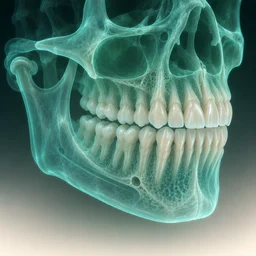 Sinus lift types: lateral window and crestalA lateral window sinus lift reaches the sinus floor through a small window in the side of the upper jaw, and a crestal (osteotome) lift raises the floor through the implant hole from below.
 PRF and growth factorsPRF and PRP are concentrates spun from the patient's own blood, and Emdogain, rhPDGF-BB (GEM 21S) and rhBMP-2 (INFUSE) are FDA-approved biologics added to periodontal or bone grafts.
 Bone graft recovery day by dayRecovery from a dental bone graft comes in stages: the gum heals over 1 to 3 weeks, and the graft then matures into bone over months before an implant.
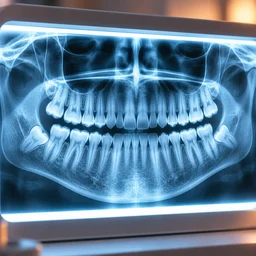 Periodontal regenerationPeriodontal regeneration regrows the bone, ligament and root cementum that hold a tooth, in deep bone defects beside a root (intrabony defects) and between the roots of molars (furcations).
 Bone graftingA dental bone graft adds bone or a bone substitute where the jaw is too thin or short for an implant, or fills a socket after extraction to keep its shape.Guided bone regeneration (GBR)Guided bone regeneration (GBR) covers a bone graft with a barrier membrane that keeps soft tissue cells out of the defect, so bone-forming cells from the surrounding jaw can fill it.