
How long dental implants last Periodontal treatment
Dental implants usually last decades when the gum and bone around them stay healthy. A systematic review of contemporary implants found 96.4% still in place after ten years. The crown on the implant wears out sooner and is replaced more often than the implant itself.

How long do dental implants last on average?
Dental implants last decades for most patients. A systematic review of implants supporting single crowns found 97.2% survival after five years. Survival in the same review was 95.2% after ten years. A review of contemporary implant systems put ten-year survival at 96.4%. A stricter analysis that allowed for patients lost to follow-up estimated 93.2%. Patients aged 65 and older had lower survival in that analysis.
A prospective case series followed implants for two decades. Their survival at the end was 89.5%. Results have improved as implant dentistry matured. In older studies, five-year survival of implant prostheses was 93.5%. In newer studies it was 97.1%. Cleveland Clinic states that implants can often last a lifetime with brushing, flossing and regular dental visits. Early warning signs are listed in signs of a failing implant.
What is the difference between implant survival and success?
Implant survival means the implant is still in the mouth; success means it is also healthy and free of significant problems. The two-decade case series classed each implant as successful, surviving or failed. Success under the stricter criteria was 75.8%. One in five implants had a biological complication with pus during follow-up. Most of those were treated and kept for the whole study period.
Single-crown implants show the same pattern. In a systematic review, soft tissue complications affected 7.1% of single-crown implants within five years. Aesthetic complications reached 7.1% over the same period. The authors called technical, biological and aesthetic complications frequent despite high survival. Inflammation and bone loss around a surviving implant are signs of peri-implantitis. Maintenance visits monitor the implant, the teeth and the gums for these changes.
How long does an implant crown last?
Implant crowns wear out sooner than the implants under them. In a systematic review, implant-supported crowns survived at 96.3% after five years. Crown survival fell to 89.4% after ten years. The implants under them survived at 95.2% over the same decade.
Screw loosening was the most common technical problem, at 8.8% over five years. Loss of retention reached 4.1% in that time. Fracture of the veneering porcelain reached 3.5%. Cleveland Clinic states that most crowns and bridges last around 15 years. Survival of both cemented and screw-retained implant restorations improved in newer studies. The restoration on an implant might need replacement at some point, according to the same source. Crowns, bridges and dentures are compared in implant vs bridge vs denture, and full-arch prostheses in full-arch implants.
Why do dental implants fail after years?
Healed implants can fail years later when peri-implantitis, a plaque-associated disease, causes progressive loss of the bone that supports them. A meta-analysis estimated peri-implantitis in 19.53% of patients. At the implant level the figure was 12.53%. An earlier review estimated a weighted mean prevalence of 22%. Prevalence rose with the time implants had been in function.
The 2017 World Workshop found strong evidence linking peri-implantitis to a history of chronic periodontitis, poor plaque control and no regular maintenance after implant therapy. Its data on smoking and diabetes as risk factors were inconclusive. Once peri-implantitis starts, it progresses in a non-linear and accelerating pattern. Patients with a history of periodontitis also had a higher risk of losing implants in a meta-analysis. Early signs are covered in early signs of peri-implantitis, and treatment results in can peri-implantitis be cured.
How can you make dental implants last longer?
Daily cleaning and regular maintenance visits help prevent the peri-implant disease that shortens implant life. A meta-analysis of maintenance programs found that the recall interval influenced peri-implantitis. Its authors suggest a recall interval of 5 to 6 months at minimum, tailored to each patient's risk. The 2017 World Workshop recommends baseline X-rays and probing once the crown or bridge is finished, so later bone loss can be measured.
Brush and floss around each implant every day, as the American Academy of Periodontology advises. Keep every maintenance visit, including X-rays when the periodontist orders them. Report red or tender gum or bleeding around an implant early, since the AAP lists those as signs of peri-implant disease. Treat gum disease around the natural teeth too, since a history of periodontitis raises implant risk. Visits follow the schedule in periodontal maintenance.
Questions
Do implants last longer in the upper or lower jaw?
Implants in the lower jaw last slightly longer on average. A meta-analysis of implants in toothless jaws estimated 98.9% five-year survival in the lower jaw. The estimate for the upper jaw was 97.9%. The yearly implant loss rate was significantly higher in the upper jaw in the same review.
Do dental implants last as long in older patients?
Implants do well in older patients, with slightly lower survival in some analyses. A meta-analysis of geriatric implant patients found 96.1% survival after five years. A long-term review found lower survival in patients aged 65 and older once patients lost to follow-up were counted. Its authors suggest the risk of implant loss may double in older age groups.
Does smoking shorten the life of an implant?
Smoking raises implant failure and bone loss around implants. A meta-analysis found the odds of implant failure 1.96 times higher in smokers. Smokers also lost more bone around their implants, especially in the upper jaw. The extra failure risk did not grow with longer follow-up in that analysis.
What are the signs that a dental implant is healing well?
A healthy implant has gum with no redness, no bleeding on gentle probing, no swelling and no pus, as defined by the 2017 World Workshop. Discomfort should only last up to a week after surgery, according to Guy's and St Thomas'. A loose or wobbly implant is one of the signs Cleveland Clinic lists for calling the dentist.
Can dental implants fall out?
Implants can be lost when the bone does not bond to them during healing or when peri-implantitis destroys the supporting bone later. Guy's and St Thomas' describes a small risk that implants do not join properly with the jawbone, higher in people who smoke. Parts of an implant can also loosen or wear out with time.
Sources
- Jung RE et al. Systematic review of the survival rate and the incidence of biological, technical, and aesthetic complications of single crowns on implants reported in longitudinal studies with a mean follow-up of 5 years. Clin Oral Implants Res 2012
- Howe MS, Keys W, Richards D. Long-term (10-year) dental implant survival: a systematic review and sensitivity meta-analysis. J Dent 2019
- Chappuis V et al. Long-term outcomes of dental implants with a titanium plasma-sprayed surface: a 20-year prospective case series study in partially edentulous patients. Clin Implant Dent Relat Res 2013
- Pjetursson BE et al. Improvements in implant dentistry over the last decade: comparison of survival and complication rates in older and newer publications. Int J Oral Maxillofac Implants 2014
- Cleveland Clinic. Dental implants. Health Library 2026
- Diaz P et al. What is the prevalence of peri-implantitis? A systematic review and meta-analysis. BMC Oral Health 2022
- Derks J, Tomasi C. Peri-implant health and disease: a systematic review of current epidemiology. J Clin Periodontol 2015
- Schwarz F et al. Peri-implantitis. 2017 World Workshop review. J Clin Periodontol 2018
- Sgolastra F et al. Periodontitis, implant loss and peri-implantitis: a meta-analysis. Clin Oral Implants Res 2015
- Monje A et al. Impact of maintenance therapy for the prevention of peri-implant diseases: a systematic review and meta-analysis. J Dent Res 2016
- Berglundh T et al. Peri-implant diseases and conditions: consensus report of workgroup 4 of the 2017 World Workshop. J Clin Periodontol 2018
- American Academy of Periodontology. Peri-implant diseases
- American Academy of Periodontology. Dental implant procedures
- Kern JS et al. A systematic review and meta-analysis of removable and fixed implant-supported prostheses in edentulous jaws: post-loading implant loss. Clin Oral Implants Res 2016
- Schimmel M et al. Effect of advanced age and/or systemic medical conditions on dental implant survival: a systematic review and meta-analysis. Clin Oral Implants Res 2018
- Moraschini V, Barboza Ed. Success of dental implants in smokers and non-smokers: a systematic review and meta-analysis. Int J Oral Maxillofac Surg 2016
- Guy's and St Thomas' NHS Foundation Trust. Dental implants: overview
- Guy's and St Thomas' NHS Foundation Trust. After having a dental implant
Dental implants Read next
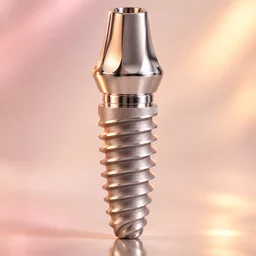 Dental implantsA dental implant is a titanium or zirconia post placed in the jawbone to replace a tooth root.Dental implant process and timelineThe dental implant process runs from a consultation and 3D CBCT scan, through implant surgery and bone healing, to the abutment and final crown.Immediate implants and same-day teethImmediate implants go into the socket on the day a tooth is removed, and immediate loading attaches a tooth to an implant within a week of surgery.
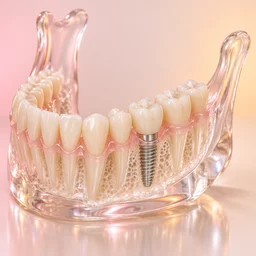 Full-arch implants and implant denturesFull-arch implants replace every tooth in a jaw with either a bridge fixed to implants or a denture that snaps onto them.Zirconia vs titanium implantsTitanium and zirconia implants both bond to the jawbone; titanium has the longer research record and zirconia is the ceramic option.
 Guided implant surgeryGuided implant surgery plans each implant on a 3D CBCT scan and transfers the plan to the mouth with a printed guide, live navigation or a robot arm.