
Immediate implants and same-day teeth Periodontal treatment
Immediate implants go into the socket on the day a tooth is removed, and immediate loading attaches a tooth to an implant within a week of surgery. A meta-analysis of single implants found 94.9% survival with immediate placement, and every failure happened early. An intact socket, firm primary stability and careful case selection decide who qualifies.

Step by step
- Exam and CBCT scan of the tooth, the socket walls and the bone beyond the root.
- Gentle removal of the tooth to keep the socket walls intact.
- Placement of the implant toward the palate side of the socket, tightened to a measured torque.
- Grafting of the gap between the implant and the facial bone when it is wide or the wall is damaged.
- A crown or bridge attached the same day when the implant is stable enough.
- Final crown after the bone heals, then maintenance visits that watch the gum line.
What is immediate placement vs immediate loading?
Immediate placement describes when the implant goes in; immediate loading describes when a tooth goes on it. A Cochrane review defines immediate implants as those placed in the socket just after tooth extraction. Immediate-delayed implants go in after weeks up to about a couple of months of soft tissue healing. Delayed implants go into partly or completely healed bone.
Loading has its own definitions. A second Cochrane review defines immediate loading as within 1 week of implant placement. Early loading runs from the end of the first week to 2 months. Conventional loading comes after 2 months. The ITI combines both choices into types: Type 1A, for example, is immediate placement with immediate loading. Same-day teeth describes a crown or bridge attached on the day of surgery, for one tooth or for a full arch. The implant timeline shows where each option fits.
Who qualifies for an immediate implant?
Candidates for an immediate implant have an intact socket and enough bone beyond the root to hold the implant firmly. Wilson names adequate bone for implant stability and an intact socket as the features of sites that respond best. A systematic review of immediate placement with immediate loading in the upper front teeth found highly selective inclusion and exclusion criteria in every included study.
Primary stability is measured at surgery. The single-crown trials in an ITI consensus review inserted implants with a torque of at least 20 to 45 Ncm. The same trials accepted an implant stability quotient of 60 to 65 or higher as the alternative test. For full arches loaded at once, most studies in a second ITI review recommended a minimum insertion torque of 30 Ncm. A later meta-analysis found that low insertion torque had no significant effect on survival of immediately loaded implants. Its mean follow-up was 24 months. Active periodontitis is treated first, as for any implant candidate.
Are immediate implants as successful as delayed implants?
Immediate implants survive at high rates, with a small extra risk of early failure. A meta-analysis of single implants found 94.9% survival for placement at extraction. Survival in the same analysis was 98.9% for delayed placement. That review defined delayed placement as 3 months or more after extraction, and every failure it recorded happened early. A systematic review of prospective studies put the annual failure rate of immediate implants at 0.82%. Failure rates in that review were lower in groups given a course of antibiotics after surgery.
Loading time made less difference. A Cochrane review found no evidence of a difference in implant failure between immediate and conventional loading in the first year. An ITI review of partially edentulous patients reported 98.4% weighted survival for immediate placement with immediate loading. That review rated the protocol clinically documented; immediate placement with conventional loading earned the higher rating of scientifically and clinically validated. Long-term implant survival covers the years that follow.
Do immediate implants cause gum recession?
Gum recession on the front of the implant is a known aesthetic risk of immediate placement. A review of implants in extraction sites by Chen and Buser found recession of the facial gum margin common with immediate placement. Its risk indicators were a thin gum biotype, an implant set too far toward the lip, and a thin or damaged facial bone wall. Early placement after weeks of gum healing showed less recession in the same review.
The gap between the implant and the facial bone matters too. Gaps of 2 mm or less filled with bone on their own around rough-surface implants in an earlier review. Larger gaps and damaged socket walls needed membranes and bone grafts. Wilson places the implant toward the palate side of the socket so that hard and soft tissue grafts can go on the facial side. A soft tissue graft thickens thin gum, and guided bone regeneration rebuilds a damaged wall.
What are same-day teeth on implants?
Same-day teeth are crowns or full-arch bridges attached to implants on the day of surgery or soon after. In a systematic review of the All-on-4 concept, full-arch bridges were fitted within 48 hours of surgery. The main prosthetic problem in that review was fracture of all-acrylic bridges. For full arches, a review of rough-surface implants found estimated implant survival above 99% after the first year with immediate, early and conventional loading alike.
Cochrane trials comparing immediate loading in and out of biting contact gave insufficient evidence to choose between the two. Case selection drives results: the studies behind these numbers used rough-surface implants, careful selection and firm primary stability. Full-arch implants covers implant numbers and bridge materials, and guided surgery can plan same-day cases.
Questions
Can an infected tooth be replaced with an immediate implant?
An infected tooth can be replaced with an immediate implant in selected cases. Wilson describes complete cleaning of the socket and systemic antibiotics for infected sites. A review by Chen and colleagues found that delayed placement lets local infection resolve and adds gum for closing the site, at the cost of more ridge shrinkage. Ask your periodontist whether the infection changes the timing.
Can immediate implants replace back teeth?
Immediate implants are placed in back teeth as well as front teeth. In a systematic review of immediate implants, position in the mouth, front or back and upper or lower jaw, did not significantly change survival. The regimen of antibiotic use was the only factor analysed that did. The upper front teeth carry the extra aesthetic risk of gum recession.
Do I need antibiotics with an immediate implant?
Antibiotics are a common part of implant surgery. A Cochrane review found that a single 2 g dose of amoxicillin before implant surgery significantly reduced implant failure. For immediate implants, a systematic review found lower failure rates in groups given a course of antibiotics after surgery. Tell the periodontist about any antibiotic allergy before the procedure.
Does an immediate implant need a bone graft?
An immediate implant needs a graft when the gap to the socket wall is wide or a wall is damaged. A review found that gaps of 2 mm or less filled with bone on their own around rough-surface implants. A Cochrane review found too few trials to say when augmentation is needed at immediate implants or which technique works best.
Can front teeth get same-day implants?
Upper front teeth can receive an implant and a temporary crown on the day of extraction in selected cases. The 2023 ITI consensus called immediate placement with immediate loading in the upper front teeth predictable under favorable conditions and associated with high survival rates. The systematic review behind that consensus found high survival in studies with strict patient and site selection criteria.
How long does an immediate implant take to heal?
An immediate implant still needs time for the bone to bond to it. A Cochrane review describes conventional healing as keeping implants free of load for 3 to 8 months. Immediate loading puts a tooth on the implant within a week of surgery. A graft placed at the same visit adds healing time, since Cleveland Clinic gives at least three months for a bone graft to heal.
Sources
- Esposito M et al. Interventions for replacing missing teeth: dental implants in fresh extraction sockets (immediate, immediate-delayed and delayed implants). Cochrane Database Syst Rev 2010
- Esposito M et al. Interventions for replacing missing teeth: different times for loading dental implants. Cochrane Database Syst Rev 2013
- Esposito M et al. Interventions for replacing missing teeth: antibiotics at dental implant placement to prevent complications. Cochrane Database Syst Rev 2013
- Gallucci GO et al. Implant placement and loading protocols in partially edentulous patients: a systematic review. Clin Oral Implants Res 2018
- Wilson TG, Buser D. Timing of anterior implant placement postextraction: immediate versus early placement. Clin Adv Periodontics 2011
- Hamilton A et al. Selection criteria for immediate implant placement and immediate loading for single tooth replacement in the maxillary esthetic zone: a systematic review and meta-analysis. Clin Oral Implants Res 2023
- Benic GI et al. Loading protocols for single-implant crowns: a systematic review and meta-analysis. Int J Oral Maxillofac Implants 2014
- Papaspyridakos P et al. Implant loading protocols for edentulous patients with fixed prostheses: a systematic review and meta-analysis. Int J Oral Maxillofac Implants 2014
- Darriba I et al. Influence of low insertion torque values on survival rate of immediately loaded dental implants: a systematic review and meta-analysis. J Clin Periodontol 2023
- Cosyn J et al. The effectiveness of immediate implant placement for single tooth replacement compared to delayed implant placement: a systematic review and meta-analysis. J Clin Periodontol 2019
- Lang NP et al. A systematic review on survival and success rates of implants placed immediately into fresh extraction sockets after at least 1 year. Clin Oral Implants Res 2012
- Chen ST, Buser D. Clinical and esthetic outcomes of implants placed in postextraction sites. Int J Oral Maxillofac Implants 2009
- Chen ST, Wilson TG, Hammerle CH. Immediate or early placement of implants following tooth extraction: review of biologic basis, clinical procedures, and outcomes. Int J Oral Maxillofac Implants 2004
- Morton D et al. Group 5 ITI Consensus Report: implant placement and loading protocols. Clin Oral Implants Res 2023
- Patzelt SB et al. The all-on-four treatment concept: a systematic review. Clin Implant Dent Relat Res 2014
- American Academy of Periodontology. Dental implant procedures
- Cleveland Clinic. Dental bone graft. Health Library 2024
Immediate implants and same-day teeth In Florida
Practices whose own website has a page for this treatment. Each name opens the practice record.
Tampa Bay
Central
Southwest
Southeast
Dental implants Read next
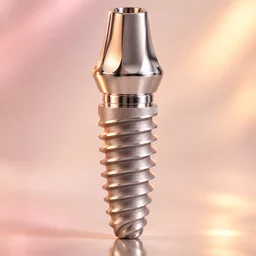 Zirconia vs titanium implantsTitanium and zirconia implants both bond to the jawbone; titanium has the longer research record and zirconia is the ceramic option.
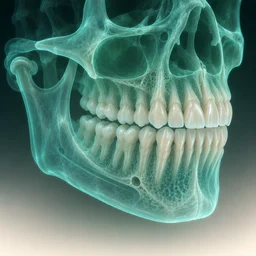 Guided implant surgeryGuided implant surgery plans each implant on a 3D CBCT scan and transfers the plan to the mouth with a printed guide, live navigation or a robot arm.How long dental implants lastDental implants usually last decades when the gum and bone around them stay healthy.
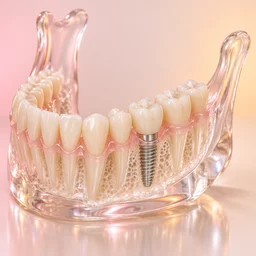 Implant vs bridge vs dentureDental implants, bridges and dentures all replace missing teeth; they differ in surgery, effect on the neighboring teeth, upkeep and time to finish.
 Recovery after dental implant surgeryRecovery after dental implant surgery takes about a week for the gum and several months for the bone.Mini dental implantsMini dental implants are narrow implants, usually in one piece, used mostly to hold a denture in place when the jaw is too thin for standard implants.