
Guided implant surgery Periodontal treatment
Guided implant surgery plans each implant on a 3D CBCT scan and transfers the plan to the mouth with a printed guide, live navigation or a robot arm. In a meta-analysis of static guides, the mean error at the implant's entry point was 1.2 mm. Its authors advise keeping a safety margin of at least 2 mm in planning.

Step by step
- A CBCT scan of the jaw and a scan or impression of the teeth.
- Planning software places a virtual implant clear of nerves, roots and the sinus.
- The plan becomes a printed surgical guide, a navigation plan or a robot plan.
- At surgery, the guide, the tracking camera or the robot arm keeps the drill on the planned path.
- The implant is placed, often through a small opening with no gum flap.
- An X-ray checks the final implant position.
What is guided implant surgery?
Guided implant surgery transfers a computer plan of each implant's position, angle and depth to the mouth. The plan is built on a CBCT scan, which the American Academy of Oral and Maxillofacial Radiology names the imaging method of choice for implant sites. The FDA summary for one guidance system describes placing a virtual implant on the scan so the surgeon can avoid critical anatomical structures.
The plan reaches the mouth by static, dynamic or robot-assisted guidance. A static guide is a printed template that steers the drill. A dynamic navigation system tracks the drill and the patient and shows the drill on the CT scan in real time. A robotic system adds an arm that holds the drill and constrains it to the plan. A review of CBCT in implant dentistry notes that the same 3D data can be transferred to surgery by 3D printing or navigation. Planning happens during the implant process before surgery day.
How accurate are surgical guides for implants?
Static surgical guides place implants close to the plan, with small average errors. A meta-analysis of clinical studies found a mean error of 1.2 mm at the entry point. The mean error at the implant tip was 1.4 mm. The mean angle error was 3.5 degrees. Guides were more accurate in partially edentulous jaws than in fully edentulous jaws. The authors judged static guides within the clinically acceptable range in most situations and advised a safety margin of at least 2 mm.
Randomized trials compared flapless guided surgery with freehand surgery through a gum flap. Angular deviation was lower with the guide by a mean 3.88 degrees. Even guided implants still deviated from the plan, so the safety margin applies to every method. Guided flapless placement is also combined with immediate loading of full arches. Implant survival in those studies ranged from 90% to 99.4%. The same planning supports immediate implants.
What is dynamic navigation in implant surgery?
Dynamic navigation tracks the drill and the patient with a camera system and shows the drill's position on the CT scan in real time. The FDA 510(k) database lists the X-Guide Surgical Navigation System from X-Nav Technologies under number K150222. FDA found it substantially equivalent in October 2015. The FDA summary for a later robotic system notes that X-Guide uses LED camera tracking and gives visual feedback only.
A meta-analysis of dynamic systems in clinical studies found a mean angle error of 3.68 degrees. Mean entry error was 1.03 mm. Dynamic systems were more accurate than freehand placement by a mean 4.33 degrees. They were also slightly more accurate than static guides. The authors still advise a 2 mm safety margin. Laboratory studies reported lower deviations than clinical ones, with a mean angle error of 2.01 degrees. Lasers, regeneration and digital planning are compared in modern periodontal techniques.
What is Yomi robotic dental implant surgery?
Yomi is a robotic guidance system for dental implant surgery made by Neocis, Inc. of Miami, Florida. Neocis obtained FDA clearance for the system's guidance arm as the Neocis Guidance System, 510(k) K161399. FDA found it substantially equivalent on December 22, 2016. A 2020 clearance paired the Neocis Guidance System with Yomi Plan software. The FDA summary for K161399 describes a guidance arm that holds a standard dental drill and constrains drilling to the planned path, with the surgeon in control of the drill. The arm does not move unless the surgeon applies force to the drill.
A later clearance, K231018, covers the Yomi Robotic System for partially and fully edentulous adult patients, which includes full-arch cases. It also covers planning and performing guided bone reduction of the jaws. In a meta-analysis of robotic systems in clinical studies, the mean angle error was 1.62 degrees. Mean deviation at the implant platform was 0.69 mm. The same review called for large randomized trials comparing robots with other techniques.
Is guided implant surgery less painful?
Flapless guided surgery caused less pain after surgery than freehand surgery with a gum flap in randomized trials. The mean difference was 17.09 mm on a visual analogue pain scale. The certainty of that pain evidence was low. Swelling showed a smaller difference, with very low certainty.
Guided surgery has limits. Flapless static guided surgery had a 12% intraoperative complication rate in those trials. The protocol could not be completed in 7% of cases. Evidence on implant survival, long-term prognosis and cost with flapless guided surgery is still scarce, according to the same review. The authors suggest flapless guided placement when the aim is minimal invasiveness, with careful case selection and a safety margin. Aftercare is the same as for any implant, as described in implant recovery, and does gum surgery hurt covers pain control.
Questions
Does guided surgery improve implant survival?
Evidence that guided surgery raises implant survival is scarce. A systematic review of randomized trials found the documented gains in accuracy, postoperative pain and surgery time, and called evidence on implant survival, success and cost scarce. Ask the periodontist which method the office uses and why it fits the case.
Is robotic dental implant surgery safe?
FDA cleared the Neocis Guidance System through 510(k) review, which found it substantially equivalent to a legally marketed navigation system. The FDA summary states that the device is not intended to replace the surgeon's judgment and that the surgeon can modify the planned implant positions at any time. Clinical studies show high accuracy, and reviewers call for larger randomized trials.
Can guided surgery be used for full-arch implants?
Guided surgery is used for full arches, with somewhat lower accuracy than in partly toothed jaws. A meta-analysis found static guides significantly more accurate in partially edentulous cases than in fully edentulous ones. The Yomi Robotic System clearance covers fully edentulous adult patients. The safety margin advised by the reviews applies to every full-arch plan.
What is the difference between fully guided and pilot-guided surgery?
In a pilot-guided protocol the guide steers the first drill only; in a fully guided protocol it steers the drilling sequence and the implant placement. A meta-analysis of clinical trials found fully guided protocols significantly more accurate than pilot-guided ones. Fully guided and partially guided protocols did not differ significantly in the same review.
How long does guided implant surgery take?
Flapless guided surgery was shorter than freehand flap surgery by a mean 24.28 minutes in randomized trials. Planning adds steps before surgery day: the CBCT scan, the digital plan and, for a static guide, printing the guide. The robotic system in the FDA summary also uses a patient splint that is placed before the CT scan.
Sources
- Tyndall DA et al. Position statement of the American Academy of Oral and Maxillofacial Radiology on selection criteria for the use of radiology in dental implantology with emphasis on cone beam computed tomography. Oral Surg Oral Med Oral Pathol Oral Radiol 2012
- FDA 510(k) K161399, Neocis Guidance System, Neocis Inc., decided 2016-12-22
- FDA 510(k) summary K161399, Neocis Guidance System
- FDA 510(k) summary K202100, Neocis Guidance System with Clamped Chairside Patient Splint, 2020
- FDA 510(k) K202264, Neocis Guidance System (NGS) with Yomi Plan v2.0, decided 2020-12-04
- FDA 510(k) K231018, Yomi Robotic System, Neocis Inc., decided 2023-08-14
- FDA 510(k) summary K231018, Yomi Robotic System, 2023
- FDA 510(k) K150222, X-Guide Surgical Navigation System, X-Nav Technologies, decided 2015-10-08
- Jacobs R et al. Cone beam computed tomography in implant dentistry: recommendations for clinical use. BMC Oral Health 2018
- Tahmaseb A et al. The accuracy of static computer-aided implant surgery: a systematic review and meta-analysis. Clin Oral Implants Res 2018
- Romandini M et al. Minimal invasiveness at dental implant placement: a systematic review with meta-analyses on flapless fully guided surgery. Periodontol 2000 2023
- Jorba-Garcia A et al. Accuracy assessment of dynamic computer-aided implant placement: a systematic review and meta-analysis. Clin Oral Investig 2021
- Khaohoen A et al. Accuracy of implant placement with computer-aided static, dynamic, and robot-assisted surgery: a systematic review and meta-analysis of clinical trials. BMC Oral Health 2024
- Luo Z et al. Accuracy of robotic computer-assisted implant surgery in clinical studies: a systematic review and meta-analysis. BMC Oral Health 2025
- Papaspyridakos P et al. Implant loading protocols for edentulous patients with fixed prostheses: a systematic review and meta-analysis. Int J Oral Maxillofac Implants 2014
Guided implant surgery In Florida
Practices whose own website has a page for this treatment. Each name opens the practice record.
Southeast
Southwest
Central
North
Tampa Bay
Panhandle
Dental implants Read next
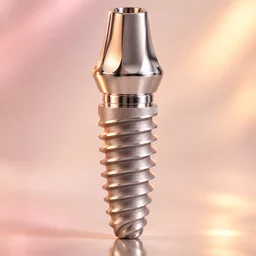 Dental implantsA dental implant is a titanium or zirconia post placed in the jawbone to replace a tooth root.Zirconia vs titanium implantsTitanium and zirconia implants both bond to the jawbone; titanium has the longer research record and zirconia is the ceramic option.
 Who can get dental implantsMost adults with healthy gums, enough jawbone and controlled medical conditions can get dental implants.How long dental implants lastDental implants usually last decades when the gum and bone around them stay healthy.
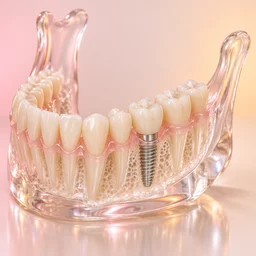 Implant vs bridge vs dentureDental implants, bridges and dentures all replace missing teeth; they differ in surgery, effect on the neighboring teeth, upkeep and time to finish.Mini dental implantsMini dental implants are narrow implants, usually in one piece, used mostly to hold a denture in place when the jaw is too thin for standard implants.