
Recovery after dental implant surgery Periodontal treatment
Recovery after dental implant surgery takes about a week for the gum and several months for the bone. Pain is usually mild and peaks in the first 24 hours. Swelling peaks 48 to 72 hours after surgery, according to University of Rochester instructions, and bruising fades over the following week or so.

What should you do right after implant surgery?
The first day after implant surgery is about controlling bleeding and swelling. Bite on gauze for 30 minutes without checking the site, as University of Rochester instructions advise. Blood-tinged saliva is expected during the first 24 hours. If bleeding restarts, use fresh gauze pressure again or gently bite on a dry tea bag over the site.
Apply ice in a damp towel against the cheek for the first 24 to 48 hours. Keep the head raised on 2 or 3 pillows when lying down. Skip alcohol for 24 hours, as Guy's and St Thomas' advises. Avoid very hot food and drink for the first day. Take painkillers before the local anesthetic wears off. Rest at home after sedation, and ask the office whether someone must drive. Related advice is in gum surgery recovery and preparing for surgery.
How long does implant pain and swelling last?
Pain after implant surgery is usually mild, peaks in the first day and fades over about a week. In a prospective study, mean pain was highest 24 hours after surgery and decreased gradually after that. In a recovery diary study, worst pain and limits on daily activity fell to about half the maximum by the second or third day. Guy's and St Thomas' advises regular painkillers for the first 48 hours. Anti-inflammatory painkillers reduced pain after implant surgery in a systematic review of trials, with pain control most critical in the first 72 hours.
Swelling peaks 48 to 72 hours after surgery, according to University of Rochester instructions. Guy's and St Thomas' lists soreness, swelling, bleeding and bruising as normal after an implant. Bruising, when it appears, fades over a week to ten days. Mouth opening can stay limited for the first week to ten days. Does gum surgery hurt covers pain control in more detail.
What can you eat after dental implant surgery?
Soft, cool food suits the first week after implant surgery. University of Rochester instructions advise nothing to eat or drink for the first hour. After that, they advise plenty of liquids and soft, cool foods. Blended foods, broth, well-cooked pasta, eggs, yogurt, cottage cheese, applesauce, bananas and ice cream fit the first two weeks. Hard, crispy foods such as chips, hard pretzels and popcorn wait until after two weeks.
Do not use straws for the first week, since suction can dislodge the blood clot. Guy's and St Thomas' tells implant patients they should be able to eat normally, with soft foods if the dentist recommends them. Denture wearers may need to leave the denture out for up to 2 weeks. Follow the written sheet from the surgeon, since advice differs by procedure and by whether a graft was placed. Bone graft recovery covers diet after grafting.
When can you exercise after dental implant surgery?
Strenuous exercise waits about 72 hours after implant surgery in University of Rochester instructions. Those instructions rule out bending, lifting, strenuous activity, sports and gym class for that period, then a gradual return as comfort allows. Cleveland Clinic advises no exercise or heavy lifting for at least 48 hours after a dental bone graft.
Work can resume sooner. Guy's and St Thomas' tells patients they can return to work the day after implant treatment. Patients who had sedation stay longer to recover before going home. After a sinus lift, the University of Rochester sheet adds sinus precautions: no nose blowing, sneezing with the mouth open, and no sucking or blowing motions such as smoking, straws or blowing up balloons. Ask the surgeon when normal exercise can resume. Sinus lift types and sedation cover the related procedures.
What are warning signs after dental implant surgery?
Warning signs after implant surgery are bleeding that will not stop, swelling or pain that rises after the first days, fever and pus. Guy's and St Thomas' advises going to the nearest emergency department if bleeding does not stop after firm pressure. For a bone graft, Cleveland Clinic advises calling the provider for a fever of 101 degrees Fahrenheit or higher. The same source lists increased swelling, pus around the graft site and severe pain as reasons to call.
Pain or swelling that worsens after the first week can signal a failing graft, according to Cleveland Clinic. Small grains of graft material can come out over the first few days; report a large amount. After healing, a loose or wobbly implant, bleeding or swollen gum and pus are signs to call the dentist. Later problems are covered in signs of a failing implant.
Questions
Can you smoke after dental implant surgery?
Smoking should stop around implant surgery. University of Rochester instructions say not to smoke during the first 7 days because smoking greatly increases the risk of healing complications. In a meta-analysis, implants in smokers failed at about double the rate of implants in non-smokers. Guy's and St Thomas' recommends stopping before treatment and staying a non-smoker.
When do stitches come out after a dental implant?
Stitches come out 7 to 14 days after implant surgery in the Guy's and St Thomas' protocol. The same visit checks how the wound is healing and cleans it if needed. Until then, that guide advises a chlorhexidine mouthwash to keep the area free of plaque. Hold the mouthwash in the mouth for 1 minute, and use it twice a day.
When can I brush my teeth after dental implant surgery?
Guy's and St Thomas' advises not brushing the implant area for 1 week and using a chlorhexidine mouthwash twice a day. University of Rochester instructions start gentle brushing the day after surgery, with warm salt-water rinses after meals. These protocols differ, so follow the surgeon's own written sheet.
Can I drink coffee after dental implant surgery?
Hot drinks wait at least a day. University of Rochester instructions advise avoiding excessively hot liquids and foods for the first 24 hours. Cool drinks are encouraged after the first hour, without a straw for the first week. Guy's and St Thomas' advises no alcohol for 24 hours.
Do I need antibiotics after implant surgery?
The strongest evidence supports antibiotics taken before implant surgery. A Cochrane review found that a single 2 g dose of amoxicillin before surgery significantly reduced implant failure. The same review found it still unknown whether antibiotics after surgery are beneficial. Take any prescribed course exactly as directed.
When can I wear my denture after implant surgery?
Guy's and St Thomas' warns that denture wearers might not be able to wear their dentures for up to 2 weeks after implant treatment. The dentist or nurse says whether this applies. For a single front-tooth implant, Cleveland Clinic describes a temporary tooth worn during healing so there is no gap.
Sources
- University of Rochester Medical Center, Oral and Maxillofacial Surgery. Postoperative instructions following dental implants or related surgery
- Guy's and St Thomas' NHS Foundation Trust. After having a dental implant
- Cleveland Clinic. Dental implants. Health Library 2026
- Cleveland Clinic. Dental bone graft. Health Library 2024
- Al-Khabbaz AK, Griffin TJ, Al-Shammari KF. Assessment of pain associated with the surgical placement of dental implants. J Periodontol 2007
- Hashem AA, Claffey NM, O'Connell B. Pain and anxiety following the placement of dental implants. Int J Oral Maxillofac Implants 2006
- Khouly I et al. Post-operative pain management in dental implant surgery: a systematic review and meta-analysis of randomized clinical trials. Clin Oral Investig 2021
- Chrcanovic BR, Albrektsson T, Wennerberg A. Smoking and dental implants: a systematic review and meta-analysis. J Dent 2015
- Esposito M et al. Interventions for replacing missing teeth: antibiotics at dental implant placement to prevent complications. Cochrane Database Syst Rev 2013
Dental implants Read next
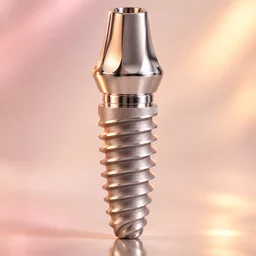 Dental implantsA dental implant is a titanium or zirconia post placed in the jawbone to replace a tooth root.Immediate implants and same-day teethImmediate implants go into the socket on the day a tooth is removed, and immediate loading attaches a tooth to an implant within a week of surgery.
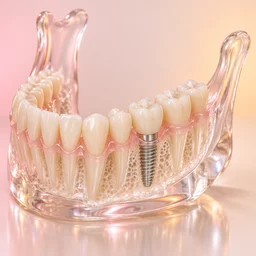 Full-arch implants and implant denturesFull-arch implants replace every tooth in a jaw with either a bridge fixed to implants or a denture that snaps onto them.Zirconia vs titanium implantsTitanium and zirconia implants both bond to the jawbone; titanium has the longer research record and zirconia is the ceramic option.
 Who can get dental implantsMost adults with healthy gums, enough jawbone and controlled medical conditions can get dental implants.Guided implant surgeryGuided implant surgery plans each implant on a 3D CBCT scan and transfers the plan to the mouth with a printed guide, live navigation or a robot arm.