
Mini dental implants Periodontal treatment
Mini dental implants are narrow implants, usually in one piece, used mostly to hold a denture in place when the jaw is too thin for standard implants. An ITI consensus report classes implants under 2.5 mm wide as mini-implants and found their survival lower than that of standard-diameter implants.

Step by step
- Exam and CBCT scan to measure the width and height of the ridge.
- Placement of the mini implants, usually through the gum without a flap.
- Attachment of the denture the same day when the implants are stable.
- Fitting of retention housings in the denture over each implant.
- Maintenance visits to check the gum and replace worn retention parts.
What size is a mini dental implant?
Mini dental implants are implants under 2.5 mm in diameter in the ITI consensus classification. The second category in that classification runs from 2.5 mm to under 3.3 mm. The third covers 3.3 to 3.5 mm. The systematic review behind the consensus used a cutoff of under 3.0 mm for its mini-implant category. A review of denture retention trials also defined mini implants as under 3 mm.
Products follow these sizes. The Straumann Mini Implants described in their FDA summary are tapered implants with an external diameter of 2.4 mm. FDA's performance-criteria pathway for implants excludes implants with a diameter of less than 3.25 mm. Ask the office for the exact diameter and brand of any implant proposed, since mini and narrow are used loosely. Materials are compared in zirconia vs titanium implants, and standard implants in dental implants.
What are mini dental implants used for?
Mini implants are used mainly to hold complete dentures. The FDA summary for the Straumann Mini Implants states that they are intended for the stabilization of removable dentures. The systematic review behind the ITI consensus found its mini category mainly described for the rehabilitation of the highly atrophic upper or lower jaw.
The FDA indications for the IMTEC Sendax MDI describe self-tapping titanium threaded screws for long-term use inside the bone. The same indications allow temporary use between roots while other treatment heals. Reviews of mini implant overdentures found that most studies used a flapless technique, with varied loading protocols and retention methods. All studies in one review found higher patient satisfaction and quality of life after treatment with mini implants. Mini implants are one way to secure a snap-in denture, alongside two standard implants.
Are mini dental implants as good as regular implants?
Mini implants under 2.5 mm survive at lower rates than standard implants. Narrow implants of 2.5 mm and wider showed no survival difference from standard diameters in the ITI consensus. Mean survival was 94.7% for the mini category. Mean survival reached 97.7% in the widest narrow category. The review behind the consensus found the odds of failure 4.54 times higher for its mini category than for standard implants.
Results under lower dentures are high in the short to medium term. A review of mini implants retaining lower dentures found 95.63% survival over short to medium follow-up. In randomized trials, mini implant survival under lower dentures ranged from 89% to 98%. Standard implants in the same trials reached 99% to 100%. The authors still called mini implants a viable alternative for retaining a lower denture. Long-term survival of any implant is covered in how long implants last.
How many mini implants are needed for a denture?
Four mini implants are the usual minimum for a lower denture. A systematic review of mini implant overdentures suggests at least 4 in the lower jaw. The same review suggests at least 6 in the upper jaw. Most patients in another review received four mini implants for their lower denture.
Standard implants need fewer. The McGill consensus names a two-implant overdenture the first-choice standard of care for the toothless lower jaw. A review comparing standard implants with mini implants for lower overdentures called the mini option a viable alternative, with high survival and acceptable bone loss. In lower overdenture trials, denture fractures and housing repairs were more frequent with one implant than with two. Ask your periodontist how many implants the plan uses and why. Implant overdentures and fixed bridges are compared in full-arch implants.
What are the limits of mini dental implants?
Mini implants carry more risk of fracture, fail more often in the upper jaw and lack long-term data. A systematic review notes that the risk of fracture is increased when titanium implants are used in reduced diameters. In a review of mini implant overdentures, failures were 31.71% in the upper jaw. Failures in the lower jaw were 4.89%.
A systematic review found mini implants under 3.0 mm documented only for the toothless jaw and single-tooth sites without biting load. The same review found success rates unavailable and follow-up beyond one year, along with data on tooth grinding, missing. Bone that is too narrow for standard implants can be widened first. Ask the periodontist whether ridge augmentation would allow standard implants, and see who can get implants for the health checks.
Questions
Are mini dental implants permanent?
Mini implants are placed to stay in the bone for the long term, and the denture they hold snaps on and off. FDA cleared the IMTEC MDI for long-term use inside the bone. The retention parts in the denture wear with use, and overdenture trials track O-ring replacement and housing repairs as prosthetic complications.
Can mini implants be used for front teeth?
Narrow implants are used for single front teeth in tight gaps. A systematic review found implants of 3.0 to 3.25 mm mostly used for limited spaces in front single-tooth restorations. Implants under 3.0 mm were documented only for the toothless jaw and single-tooth sites without biting load. Ask the periodontist about the diameter planned for the gap.
Can mini implants be used for molars?
Mini implants are not documented for molars. A systematic review found implants of 3.3 to 3.5 mm to be the narrow size documented in load-bearing back teeth. The FDA summary for Straumann narrow implants states that small diameter implants are only used in cases with a low mechanical load and that placement in the molar region is not recommended.
Can mini implants be done in one day?
Mini implants can carry a denture on the day of placement when they are stable. The FDA summary for the Straumann Mini Implants states that they can be placed with immediate function when good primary stability is achieved. The denture connects to them through an attachment element built into the top of each implant, according to the same summary.
What are mini dental implants made of?
Mini implants are made of titanium or titanium alloys. The FDA indications for the IMTEC MDI describe self-tapping titanium threaded screws. Straumann Mini Implants use Roxolid, a titanium-zirconium alloy, which a systematic review describes as having higher tensile strength than commercially pure titanium.
Sources
- Jung RE et al. Group 1 ITI Consensus Report: the influence of implant length and design and medications on clinical and patient-reported outcomes. Clin Oral Implants Res 2018
- Schiegnitz E, Al-Nawas B. Narrow-diameter implants: a systematic review and meta-analysis. Clin Oral Implants Res 2018
- Klein MO, Schiegnitz E, Al-Nawas B. Systematic review on success of narrow-diameter dental implants. Int J Oral Maxillofac Implants 2014
- Aljudaibi SM et al. Retention of mandibular complete overdentures using mini dental implants and standard diameter implants: a systematic review and meta-analysis of randomised controlled trials. Oral Health Prev Dent 2024
- FDA 510(k) summary K191895, Straumann Mini Implants, 2019
- FDA. Endosseous dental implants and endosseous dental implant abutments: performance criteria for safety and performance based pathway. Guidance 2024
- FDA 510(k) K031106, IMTEC Sendax MDI and MDI Plus, indications for use, 2003
- Jawad S, Clarke PT. Survival of mini dental implants used to retain mandibular complete overdentures: systematic review. Int J Oral Maxillofac Implants 2019
- Lemos CA et al. Complete overdentures retained by mini implants: a systematic review. J Dent 2017
- Araby YA, Hameed SK. Two conventional implants vs four mini dental implants to retain mandibular overdentures: a systematic review of clinical and radiological outcomes. J Oral Implantol 2025
- Feine JS et al. The McGill consensus statement on overdentures: mandibular two-implant overdentures as first choice standard of care for edentulous patients. Gerodontology 2002
- Koyama R et al. Single versus two implant-supported mandibular overdentures: a systematic review and meta-analysis of implant survival and prosthetic complications. Int J Implant Dent 2025
- Altuna P et al. Clinical evidence on titanium-zirconium dental implants: a systematic review and meta-analysis. Int J Oral Maxillofac Surg 2016
Mini dental implants In Florida
Practices whose own website has a page for this treatment. Each name opens the practice record.
Southeast
Southwest
North
Panhandle
Tampa Bay
Dental implants Read next
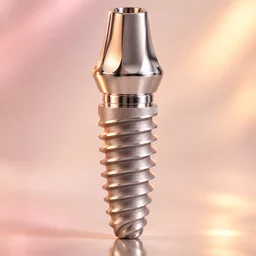 Dental implant process and timelineThe dental implant process runs from a consultation and 3D CBCT scan, through implant surgery and bone healing, to the abutment and final crown.Immediate implants and same-day teethImmediate implants go into the socket on the day a tooth is removed, and immediate loading attaches a tooth to an implant within a week of surgery.
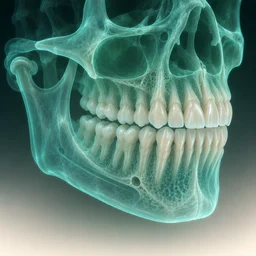 Who can get dental implantsMost adults with healthy gums, enough jawbone and controlled medical conditions can get dental implants.Guided implant surgeryGuided implant surgery plans each implant on a 3D CBCT scan and transfers the plan to the mouth with a printed guide, live navigation or a robot arm.How long dental implants lastDental implants usually last decades when the gum and bone around them stay healthy.
 Recovery after dental implant surgeryRecovery after dental implant surgery takes about a week for the gum and several months for the bone.